Ever wondered how a designer armchair goes from a simple sketch to a stunning piece in your living room? The journey of chair form development is a fascinating blend of art, science, and problem-solving. In this guide, we’ll walk you through the five key stages that shape the iconic chairs we love, making the complex process easy and enjoyable to understand.
Stage 1: Ideation & Conceptual Sketching
This is where every great piece of furniture design begins. It’s the exciting, messy, and creative phase of the designer armchair form development process. Think of it as brainstorming for your living space. The goal here isn’t to get everything perfect but to explore a wide range of ideas, shapes, and emotions. Designers ask like: Should it be organic and flowing, or geometric and structured? What story should this chair tell? This initial furniture design evolution is all about capturing a feeling on paper.
Finding the Spark of Inspiration
Inspiration can come from anywhere! It might be the curve of a seashell, the silhouette of a classic car, or even the way fabric drapes. Many designers start with mood boards, collecting images, textures, and color palettes. They dive into the history of chair design methodology, studying iconic pieces to understand what makes them timeless. This research phase is crucial for developing a unique armchair concept creation that feels both fresh and grounded. You might find it similar to how an artist prepares for a painting—gathering references and letting ideas simmer before the first line is drawn.
Stage 2: Prototyping & 3D Modeling
Once the best sketches are selected, the idea starts to become tangible. This stage bridges the gap between a 2D drawing and a 3D object. Designers often create quick, rough models from foam, cardboard, or clay. This hands-on prototyping for furniture design is invaluable—it lets you feel the proportions and scale in real space. Is the seat too deep? Does the back angle look right? Following this, detailed 3D modeling for chair development takes over. Using specialized software, designers build a digital twin of the chair. This model allows for precise adjustments to the form and is essential for visualizing the final product from every angle. It’s like giving the initial sketch a digital skeleton and skin.
Stage 3: Material & Ergonomic Refinement
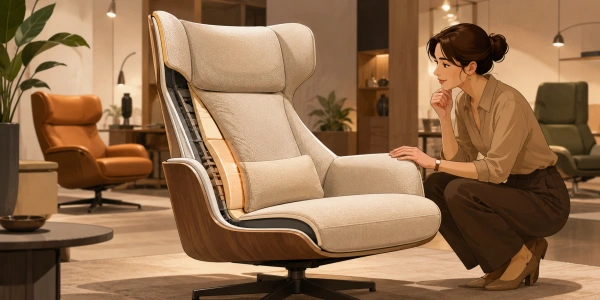
Here’s where the chair truly starts to come to life. The form must now meet the human body. This phase focuses intensely on ergonomic design for seating. Designers analyze how the contours of the chair will support the spine, thighs, and arms, often using pressure maps and anthropometric data. Simultaneously, material selection becomes paramount. The choice of wood, metal, plastic, or composite fundamentally affects the chair’s look, feel, and structural integrity. Questions of upholstery and form integration are answered: Will it be a tight leather wrap or a plush, padded cushion? This stage ensures the chair is not just beautiful but also incredibly comfortable and durable.
Stage 4: Detailing & Production Planning
The devil is in the details, as they say, and this stage proves it. Every seam, joint, and finish is scrutinized. This is the technical heart of the seat morphology development. Engineers and designers collaborate to finalize joinery methods, fastener types, and assembly sequences. They create detailed technical drawings and specifications that will guide the factory. Considerations for manufacturability are key—can this beautiful design be produced efficiently and at the intended quality? This step transforms the artistic vision into a set of clear, actionable instructions, ensuring the design refinement process results in a product that can be consistently and beautifully made.
Stage 5: Final Validation & Launch
The last step is all about confirmation and preparation. A final pre-production prototype is built using the exact intended materials and processes. This sample undergoes rigorous testing for stability, strength, and durability, often following standards outlined by organizations like ASTM International. It’s also placed in real-room settings for aesthetic validation—does it look and feel as intended in a home or office? Feedback from this final product validation in furniture design may lead to tiny last-minute tweaks. Once approved, the design is officially signed off, production begins, and the chair’s journey from a designer’s mind to the market is complete. It’s the exciting culmination of the entire creative process for armchair design.