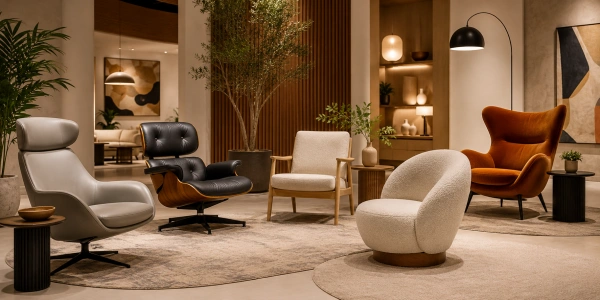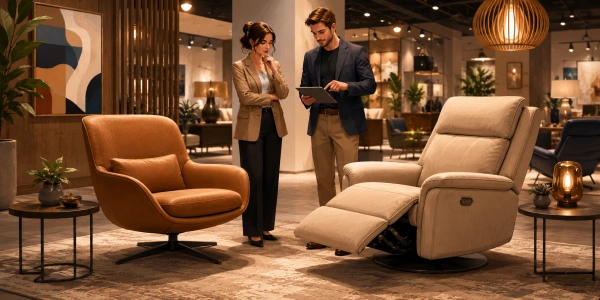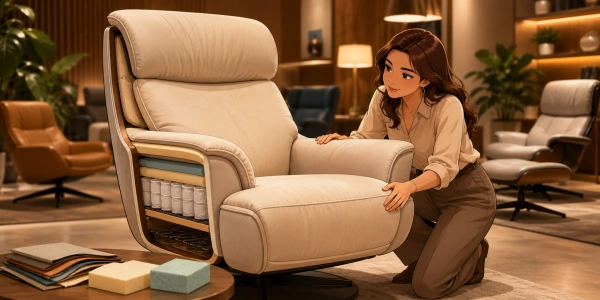
When shopping for the best seating solution, understanding lounge chair back support is crucial to prevent discomfort and long-term strain. This guide helps buyers evaluate lumbar contact, seat depth, and cushion firmness without making medical claims. Many articles focus on general comfort, but a stronger approach explains product specifications, quality control, customization, wholesale buying, and project use cases.
Back-support pages discuss ergonomics broadly. This article gives lounge-chair-specific support rules while avoiding medical claims. These points are useful, but many pages are still too consumer-focused. A stronger article should also explain product specifications, quality control, customization, wholesale buying, and project use cases where relevant.
Key Factors to Compare
- Lumbar contact: A contoured lower back area reduces pressure on the spine.
- High back: Supports the entire back, including shoulders and neck.
- Medium firmness: Avoids sinking or excessive hardness that strains muscles.
- Seat depth: Allows feet to rest flat on the floor while knees are at a 90-degree angle.
- Shoulder support: Prevents slouching and promotes upright posture.
- Standing ease: A slight forward tilt or armrests help users rise without strain.
These factors help buyers move from a general idea to a clear purchase decision. For example, comfort is affected by seat depth, seat height, back angle, foam density, and armrest position. Durability depends on frame material, leg connection, upholstery quality, stitching, and whether the chair is used at home or in a high-traffic commercial space.
How to Choose the Right Option
Start with the use scenario. A living room lounge chair should match the sofa, rug, side table, and daily relaxation habits. A bedroom chair should be compact, soft, and suitable for reading or dressing. A hotel or waiting area chair should be easy to clean, stable, and consistent across bulk production.
Then check material and construction. Fabric offers warmth and many color choices. Leather and PU leather are easier to wipe and can look premium. Wood frames feel natural, while metal frames can look modern and strong. Outdoor chairs need weather-resistant materials instead of standard indoor upholstery.
Finally, evaluate value instead of only price. A cheaper lounge chair may use lower-density foam, weaker packaging, or lighter frames. For wholesale orders, ask for a sample, written specifications, MOQ, production lead time, inspection standards, and export packaging details.
Understanding Ergonomic Design for Back Support
Ergonomic design focuses on how a chair aligns with the natural curve of the spine. A study from the National Institute for Occupational Safety and Health (NIOSH) found that chairs with adjustable lumbar support reduce lower back pain by up to 40% in office settings. For lounge chairs, this principle applies equally.
Lumbar Support vs. Full Back Support
Lumbar support targets the lower spine curve. Full back support extends to the upper back and shoulders. Many users benefit from a medium-firm cushion that maintains shape without sagging. A chair with a 105-110 degree back angle also reduces spinal disc pressure compared to a flat or overly reclined position.
Foam Density and Resilience
Foam density, measured in pounds per cubic foot (PCF), affects support longevity. Standard foam is 1.5-1.8 PCF, while high-density foam is 2.0-2.5 PCF. A higher density foam retains its shape longer, providing consistent lounge chair back support over years of use. Always ask for foam type and density when evaluating a chair.
Quality Control and Testing Standards
Commercial buyers should verify quality control processes. Reputable manufacturers test frames for stability, foam for indentation force deflection (IFD), and upholstery for abrasion resistance. For example, a chair rated for 50,000 cycles in a durability test is suitable for hotel lobbies or waiting areas.
Frame Materials and Construction
Solid hardwood frames (e.g., oak or beech) offer superior strength compared to engineered wood. Metal frames should be powder-coated to prevent rust. Leg connections using dowels or metal brackets increase stability. Avoid chairs with visible glue joints or thin plywood that may crack under weight.
Upholstery Testing
Upholstery should pass Martindale rub tests for abrasion. A rating of 30,000 rubs is suitable for home use, while 50,000+ rubs is recommended for commercial settings. For leather, full-grain leather is durable but expensive, while bonded leather may peel within 2-3 years. PU leather offers a balance of cost and cleanability.
Buying Checklist
- Define the target room, market, or project use.
- Measure the available space and walking clearance.
- Compare seat height, seat depth, back angle, and cushion support.
- Ask for upholstery details, fabric swatches, or leather specifications.
- Check frame material, leg stability, and weight capacity.
- Confirm MOQ, sample policy, lead time, packaging, and quality inspection for bulk orders.
Customization and Wholesale Considerations
Many factories offer customization options for fabric, color, chair legs, cushion firmness, labels, logo branding, and packaging. Larger structural changes may require higher MOQ and longer lead time. For wholesale orders, request a sample first to verify lounge chair back support and overall quality.
Bulk buyers should also negotiate inspection standards. A pre-shipment inspection by a third-party agency (e.g., SGS or Bureau Veritas) ensures consistency across units. This is especially important for hospitality projects where every chair must match.
Frequently Asked Questions
Q: What is the most important thing to check before buying?
A: The most important thing is whether the chair fits the user and the space. Comfort, proportion, material, and construction should be checked together. For lounge chair back support, ensure the lumbar curve matches your spine.
Q: Is a lounge chair suitable for commercial use?
A: Yes, but commercial use requires stronger durability, easy-clean upholstery, stable frames, and consistent production quality. Look for chairs with high-density foam and abrasion-resistant fabric.
Q: Can lounge chairs be customized?
A: Many factories can customize fabric, color, chair legs, cushion firmness, labels, logo branding, and packaging. Larger structural changes may require higher MOQ and longer lead time.
Conclusion
A good lounge chair should look attractive, feel comfortable, fit the room, and remain durable after long-term use. For business buyers, choosing a reliable lounge chair manufacturer or supplier also improves quality control, customization, and wholesale value. Prioritize lounge chair back support by checking foam density, lumbar design, and frame construction to ensure lasting comfort and satisfaction.